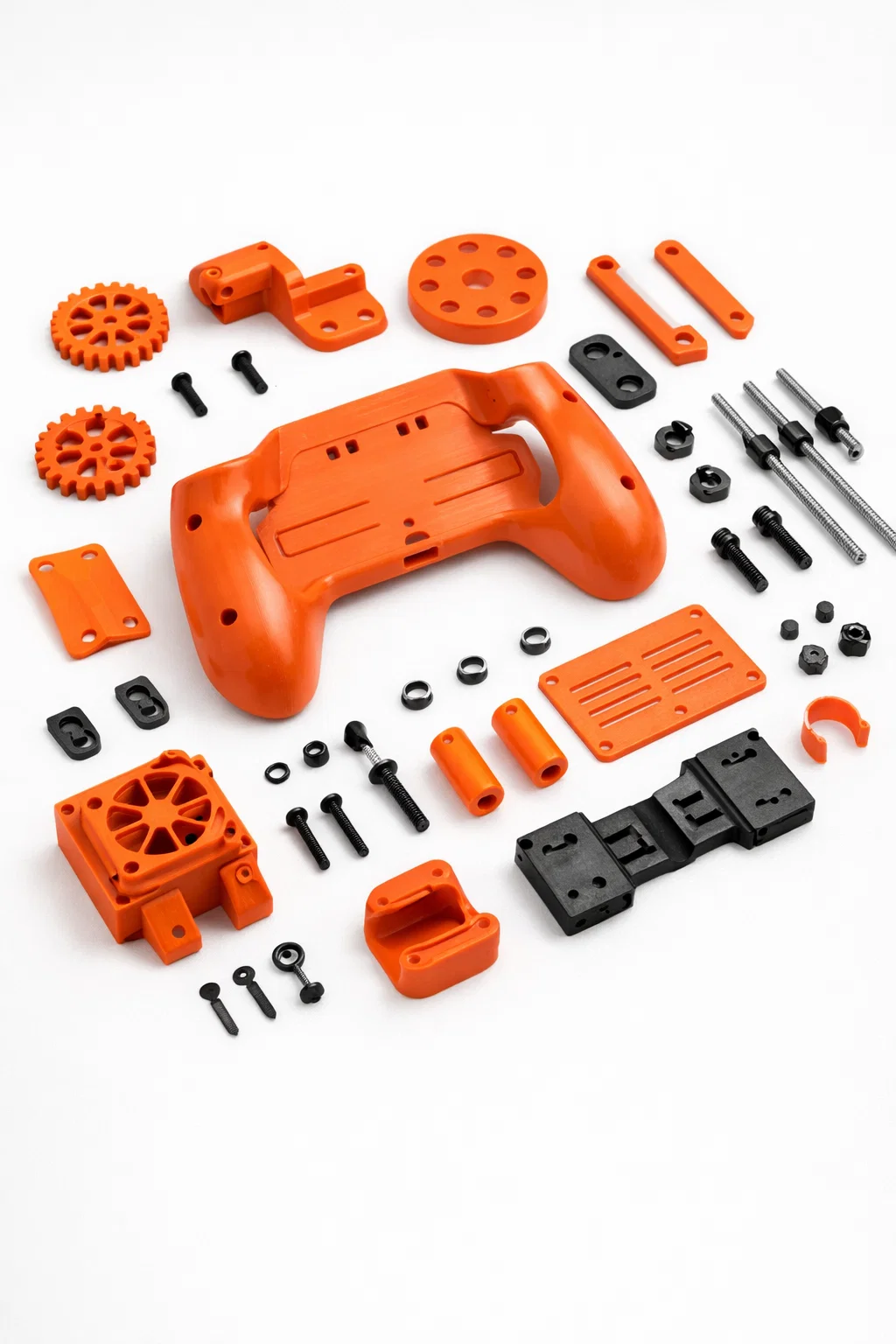
3D printing is no longer just for prototypes. Across South Africa, industries are using additive manufacturing for replacement parts, tooling, custom products, and short production runs. This article highlights ten sectors where 3D printing is making a real difference—from automotive and healthcare to mining and consumer goods—with applications you can relate to and adopt.
1. Automotive
South African automotive manufacturers and aftermarket suppliers use 3D printing for prototypes, jigs and fixtures, custom interior and exterior parts, and discontinued replacement components. Classic car restorers and racing teams get one-off or low-volume parts without tooling. Lead times drop from weeks to days, and local 3D printing services in Cape Town and Gauteng support both OEM and independent workshops.
2. Healthcare and Medical Devices
Hospitals, labs, and device manufacturers use 3D printing for anatomical models (surgical planning and training), custom prosthetics and orthotics, surgical guides, and enclosures and fixtures for medical equipment. Biocompatible materials and sterilisation options are available for regulated applications. Local production reduces dependence on imports and shortens turnaround for patient-specific devices.
3. Mining and Heavy Industry
Mining and industrial operations use 3D printing for replacement parts for machinery that would otherwise require long lead times or obsolete spares. Custom jigs, guards, and tooling improve safety and efficiency. Strong, wear-resistant materials (nylon, engineering plastics) suit harsh environments. On-site or regional 3D printing can cut downtime and inventory cost.
4. Aerospace and Defence
Aerospace and defence applications demand lightweight, high-performance parts. 3D printing is used for prototypes, tooling, and in some cases flight-ready components in metal or high-performance polymers. South African involvement in global supply chains and local R&D benefits from access to additive manufacturing for complex, low-volume parts.
5. Consumer Products and Retail
Brands and retailers use 3D printing for product development, limited editions, customisable goods, and replacement parts for products they sell. From phone stands and home accessories to appliance components, local 3D printing enables fast iteration and small batches without large minimum orders.
6. Architecture and Construction
Architects and construction firms use 3D printing for scale models, concept presentations, and increasingly for formwork, fixtures, and bespoke building components. Large-format and robotic 3D printing are emerging for structural elements. In South Africa, model-making and custom fittings are already practical with local services.
7. Education and Research
Schools, universities, and research institutions use 3D printing for teaching, experiments, and prototyping. Students and researchers get physical parts quickly and at low cost. Access to local 3D printing supports STEM education and innovation without the need for in-house equipment.
8. Electronics and Enclosures
Startups and electronics companies use 3D printing for enclosures, mounts, and connectors tailored to their boards and devices. Iterations are fast and cost-effective; small batches can be produced locally before committing to injection moulding. Cape Town and Johannesburg have a growing ecosystem of product developers using 3D printing in this way.
9. Packaging and Point of Sale
Custom display stands, packaging inserts, and point-of-sale fixtures can be 3D printed for campaigns, product launches, or niche products. Low volumes and quick changes make 3D printing attractive compared to traditional tooling.
10. Insurance and Repairs
Insurers, assessors, and repairers use 3D printing to source discontinued or hard-to-find parts, reducing claim time and cost. Instead of writing off a product or waiting for imported spares, a part can be reverse-engineered and 3D printed locally. For more on this, see 3D printing for insurance claims: faster repairs.
What This Means for You
Whatever your industry, 3D printing in South Africa is increasingly a practical option for prototypes, replacement parts, and low-volume production. Identifying where it fits in your workflow—and working with a local supplier you can actually phone—can cut lead times, reduce cost, and make designs viable that were previously uneconomical. For scaling from prototype to production, read prototyping to production: scaling your product.