Choosing the right 3D printing technology can make the difference between a part that works perfectly and one that fails or costs too much. In South Africa, the three most common options for professional and industrial use are FDM (fused deposition modelling), SLA (stereolithography), and SLS (selective laser sintering). This guide compares them so you can decide which is best for your project. For a broader intro, see What is 3D printing? The complete African guide.
FDM (Fused Deposition Modelling)
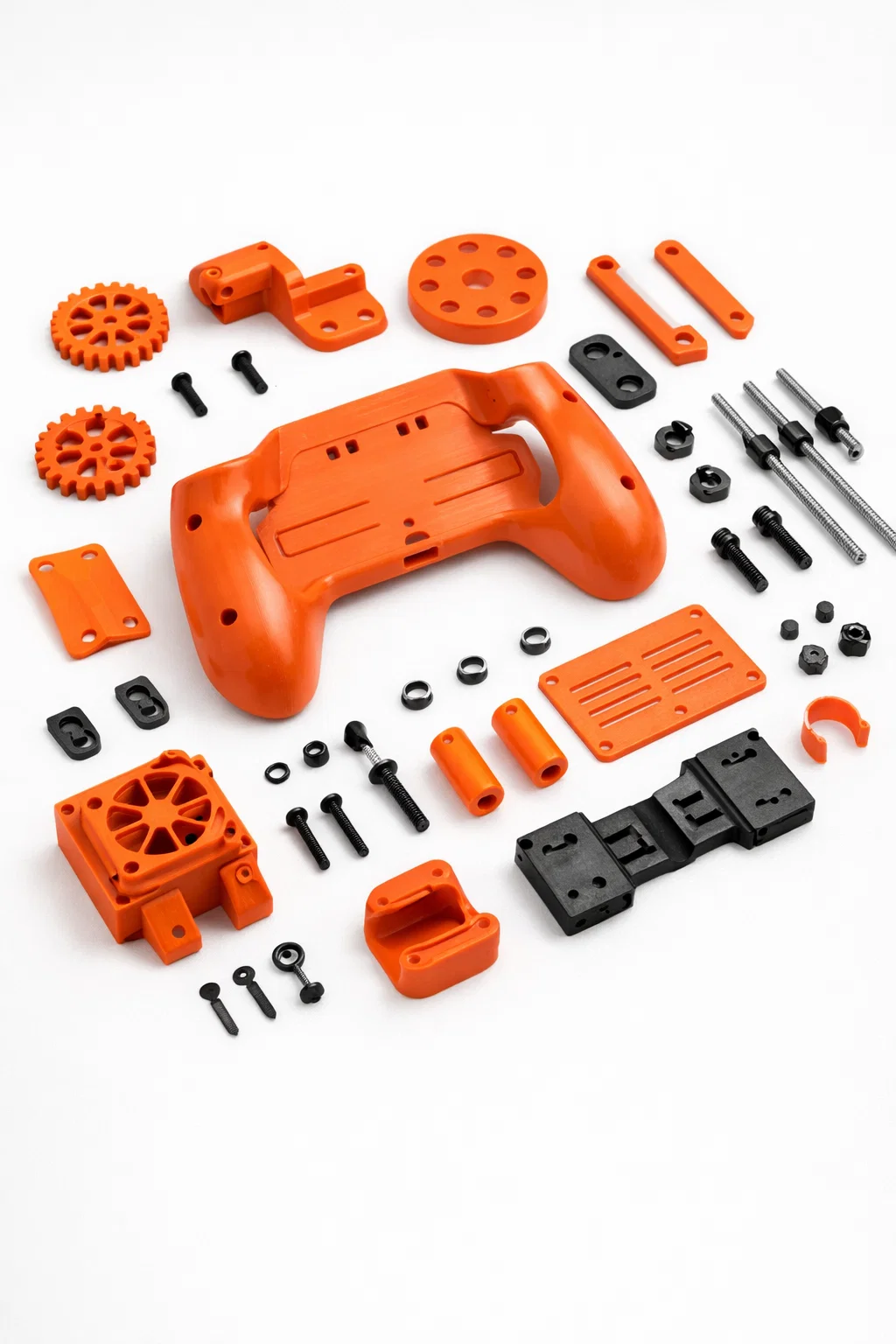
FDM prints by melting a plastic filament (e.g. PLA, ABS, PETG, Nylon) and depositing it layer by layer through a nozzle. It's the most widely used technology for both hobby and professional 3D printing and is well supported by local 3D printing services in Cape Town and across South Africa.
Strengths
- Cost-effective for larger parts and simple geometries; no resin or powder to manage.
- Wide material choice: ABS, PETG, Nylon, TPU, and engineering grades for strength or heat resistance.
- Good for functional parts, jigs, fixtures, and enclosures when surface finish is less critical.
- Fast turnaround and readily available in South Africa.
Limitations
- Visible layer lines; post-processing (sanding, painting) can improve appearance.
- Support structures are often needed for overhangs and can leave marks.
- Dimensional accuracy and fine detail are generally lower than SLA or SLS.
Best for: Functional prototypes, replacement parts, tooling, and low-cost production runs where surface finish is secondary to strength and cost.
SLA (Stereolithography)
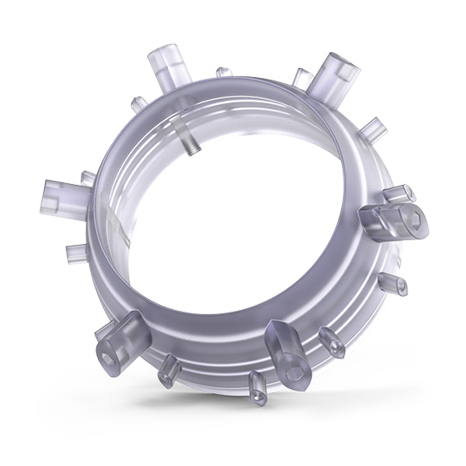
SLA uses a laser (or similar light source) to cure liquid resin layer by layer. It produces smooth surfaces and fine detail, making it popular for visual prototypes, moulds, and parts where appearance or fine features matter.
Strengths
- Very smooth surface finish and sharp detail, ideal for presentation models and master patterns.
- Good for small, detailed parts such as jewellery, dental, and small mechanical components.
- Transparent and flexible resins available for specific applications.
Limitations
- Resin parts can be brittle and UV-sensitive unless engineered resins are used.
- Support structures are required and must be removed and cleaned.
- Build volume is often smaller than FDM; material cost per part can be higher.
Best for: Aesthetic prototypes, dental and jewellery applications, master patterns for casting, and any project where surface quality and detail outweigh mechanical strength and cost.
SLS (Selective Laser Sintering)
SLS uses a laser to fuse fine powder (typically nylon or similar) layer by layer. The unfused powder supports the part, so no separate support structures are needed—making SLS well suited to complex, enclosed geometries.
Strengths
- No support structures; complex and interlocking geometries are easy to produce.
- Strong, durable nylon parts suitable for functional testing and end use.
- Good accuracy and consistency; commonly used for production of small batches.
Limitations
- Higher cost per part than FDM in many cases; powder handling and recycling add to process cost.
- Surface is slightly rough (grainy); can be smoothed or dyed if needed.
- Less common than FDM in South Africa, so fewer local suppliers.
Best for: Functional prototypes, small production runs, parts with complex internals, and applications where nylon's strength and lack of supports justify the higher cost.
Quick Comparison Table
Cost (typical): FDM < SLA < SLS for many part sizes. Surface finish: SLA > SLS > FDM. Strength (nylon/engineering): SLS and FDM (engineering materials) > SLA (standard resins). Complex geometry: SLS excels (no supports); FDM and SLA need supports. Availability in SA: FDM is most common; SLA and SLS are available from specialist providers like 3D Printing Village.
Making the Choice for Your Project
Match the technology to your priorities: low cost and fast turnaround → FDM. Best look and fine detail → SLA. Strong, complex parts without supports → SLS. When in doubt, share your CAD file and requirements with a local 3D printing service; they can recommend the best process and material. For help with materials, see our material selection guide, and for design tips see how to prepare your CAD file for 3D printing.